Article Plan: Narrative Writing Lesson Plan PDF
This comprehensive plan details a narrative writing lesson‚ incorporating handouts‚ graphic organizers‚ and exploration of themes like dystopian concepts and money’s history.
It supports diverse learners with varied expression methods and focuses on planning‚ drafting‚ and assessing personal narratives effectively.
Narrative writing is at the heart of human communication‚ allowing us to share experiences‚ explore emotions‚ and connect with others on a deeply personal level. This lesson plan aims to equip students with the foundational skills needed to craft compelling narratives.
We begin by emphasizing that narratives aren’t simply recounting events; they are about how those events are told. Students will explore how authors use key elements – character‚ setting‚ plot – to create engaging stories.
This introduction will involve analyzing existing narratives‚ both read aloud and through student examples‚ to identify common features. A key handout will facilitate this analysis‚ prompting students to note similarities and unique aspects across different stories.
The goal is to foster an appreciation for storytelling and build confidence in their own ability to become effective narrators‚ setting the stage for more focused instruction.
Defining Personal Narrative
A personal narrative is a focused story about a significant event or experience from the writer’s own life. It differs from a simple recounting of facts; it emphasizes the writer’s individual perspective‚ feelings‚ and reflections.
This lesson will clarify that personal narratives are written in the first person‚ using “I” and “me” to create a direct connection with the reader. Students will understand the importance of showing‚ not just telling‚ through vivid descriptions and sensory details.
We’ll discuss how selecting a specific moment – rather than trying to cover a large span of time – allows for deeper exploration and more impactful storytelling.
The focus is on authenticity and vulnerability‚ encouraging students to share genuine experiences while maintaining appropriate boundaries.
Key Elements of a Narrative
Effective narratives hinge on several core elements. Strong character development allows readers to connect with the story’s participants‚ understanding their motivations and growth. Equally vital is setting and atmosphere – creating a believable and immersive world through descriptive language.
A clear plot structure‚ encompassing a beginning that introduces the situation‚ a middle that develops conflict‚ and an end that provides resolution‚ is crucial.
These elements work in harmony to engage the reader and convey meaning.
We will explore how authors use dialogue‚ pacing‚ and point of view to enhance these elements.
Understanding these components empowers students to craft compelling stories with purpose and impact.
Character Development
Compelling characters drive narratives. Beyond simply naming a character‚ development requires revealing personality through actions‚ dialogue‚ and internal thoughts. Students will learn to show‚ not tell‚ a character’s traits – illustrating bravery through deeds‚ not stating “she was brave.”
Exploring motivations is key; why does a character act as they do? Backstories‚ even briefly hinted at‚ add depth.
Consider character flaws – imperfections make characters relatable and believable.
We’ll practice creating character profiles‚ detailing physical appearance‚ habits‚ and significant relationships.
This process helps students move beyond stereotypes and craft individuals who feel authentic and resonate with readers‚ enriching the overall narrative.
Setting and Atmosphere

Setting is more than just location; it’s the time‚ place‚ and environment where the story unfolds. Atmosphere is the feeling or mood created by the setting and described through sensory details.
Students will learn to use vivid language to paint a picture for the reader – what does it look‚ sound‚ smell‚ taste‚ and feel like?
The setting should influence the plot and characters; a story set in a bustling city will differ greatly from one in a remote forest.
We’ll explore how authors use setting to create suspense‚ foreshadow events‚ or reflect a character’s emotional state.
Activities will focus on descriptive writing‚ encouraging students to build immersive worlds that enhance the narrative’s impact.
Plot Structure (Beginning‚ Middle‚ End)
A compelling narrative follows a clear plot structure: beginning‚ middle‚ and end. The beginning introduces characters and setting‚ establishing the initial conflict or situation.
The middle develops the conflict‚ featuring rising action‚ challenges‚ and character development. Students will learn to build tension and create engaging obstacles.
The end resolves the conflict‚ offering a climax and resolution. This doesn’t always mean a ‘happy ending‚’ but a sense of closure.
We’ll analyze how authors use plot twists and pacing to keep readers hooked.
Graphic organizers will help students map out their plot points‚ ensuring a logical and satisfying story arc.
Pre-Writing Activities & Brainstorming
Before drafting‚ robust pre-writing is crucial. This stage unlocks creativity and organizes thoughts‚ preventing writer’s block. We’ll begin with generating story ideas through prompts and discussions.
Activities will include freewriting‚ quick writes‚ and “what if” scenarios to spark imagination. Students will explore personal experiences and fictional possibilities.
Next‚ we’ll focus on planning using graphic organizers. These visual tools help structure narratives‚ mapping out characters‚ setting‚ and key events.
Handouts will provide brainstorming templates‚ encouraging students to jot down details and explore different perspectives before committing to a storyline.
This phase emphasizes exploration and idea development‚ laying a solid foundation for effective narrative writing.
Generating Story Ideas
Igniting imagination is the first step! We’ll employ diverse techniques to unlock a wealth of narrative possibilities. Story prompts‚ focusing on “what if” scenarios‚ will encourage creative thinking.
Personal anecdotes are invaluable. Students will brainstorm significant moments from their lives – challenges overcome‚ joyful experiences‚ or impactful encounters – as potential story seeds.
Image prompts and music can also inspire. Visuals and auditory stimuli often trigger unexpected ideas and emotional connections.
Freewriting exercises‚ with timed writing bursts‚ will help bypass self-censorship and uncover hidden narratives.
The goal is quantity over quality initially‚ encouraging students to generate numerous ideas before refining them into compelling story concepts.

Using Graphic Organizers for Planning
Graphic organizers are vital for structuring narratives. They provide a visual framework for mapping out plot‚ characters‚ and setting before drafting begins.

A story map helps students outline the beginning‚ middle‚ and end‚ identifying key events and conflicts. Character webs facilitate detailed character development‚ exploring traits‚ motivations‚ and relationships.
Setting diagrams encourage students to consider the atmosphere and impact of the story’s environment.
Consider providing organizers with pre-drawn lines or boxes to support students’ fine motor skills and spatial organization‚ as suggested by EL Education Curriculum;
These tools promote logical sequencing and ensure a cohesive narrative structure‚ ultimately enhancing the clarity and impact of their stories.
Narrative Planning Graphic Organizer
A robust narrative planning graphic organizer is central to success. It should prompt students to detail key narrative elements systematically.
Sections should include: character profiles (name‚ traits‚ motivations)‚ setting description (time‚ place‚ atmosphere)‚ and a plot outline (beginning‚ rising action‚ climax‚ falling action‚ resolution).
Space for brainstorming potential conflicts and resolutions is crucial. Encourage students to consider the story’s theme and message.
EL Education Curriculum suggests incorporating lines or boxes within the organizer to aid students with fine motor skills and organization.
This organizer serves as a blueprint‚ guiding students through the planning process and ensuring a well-structured‚ compelling narrative.
Drafting the Narrative
The drafting stage transforms planning into a tangible story. Students begin constructing their narrative‚ utilizing the graphic organizer as a guide.
Emphasis should be placed on bringing the story to life through vivid descriptions and engaging dialogue. Encourage students to “show‚ don’t tell‚” illustrating events rather than simply stating them;
Focusing on the beginning is paramount; a strong opening hooks the reader. EL Education highlights drafting the beginning in a first-person perspective.
Remind students that this is a first draft – perfection isn’t the goal. The focus is on getting ideas down on paper and developing the narrative flow.
Regular check-ins and peer feedback can provide valuable support during this crucial phase.
Focusing on the Beginning of the Narrative
A compelling narrative begins with a captivating introduction. This initial section sets the tone‚ introduces characters‚ and hints at the conflict to come.
Students should brainstorm several opening lines‚ experimenting with different approaches – dialogue‚ description‚ or action. Consider using sensory details to immerse the reader.
EL Education’s curriculum stresses drafting the beginning specifically‚ recognizing its importance. Encourage students to establish the setting and introduce the protagonist early on.
The opening should create a sense of intrigue‚ prompting the reader to ask questions and want to learn more. Avoid lengthy exposition; instead‚ reveal information gradually.
A strong beginning establishes the narrative’s voice and prepares the reader for the journey ahead.
First-Person Perspective
Employing the first-person perspective (“I‚” “me‚” “my”) deeply immerses readers in the narrator’s experience‚ fostering a personal connection.
This viewpoint allows students to explore emotions and thoughts directly‚ creating a more intimate and engaging narrative. However‚ it also presents challenges.
Students must carefully consider the narrator’s biases and limitations‚ as the story is filtered through their individual perception.
EL Education’s resources highlight drafting a narrative from this perspective‚ emphasizing the importance of consistent voice and viewpoint.
Encourage students to “show‚ don’t tell” using the narrator’s observations and reactions to reveal character and plot.
Mastering first-person requires mindful attention to detail and a strong understanding of character development.
Utilizing Handouts for Note-Taking
Strategic handouts are crucial for scaffolding the narrative writing process‚ providing students with structured spaces for brainstorming and organization.
EnglishteacherVault.com emphasizes handouts that prompt students to identify common narrative features across various texts‚ fostering analytical skills.
These resources should encourage note-taking on character traits‚ setting details‚ and plot points observed in mentor texts.
Handouts can also guide pre-writing activities‚ such as generating story ideas and outlining key events.
Providing designated areas for jotting down thoughts and observations promotes active engagement with the material.
Well-designed handouts support diverse learners by offering visual cues and clear instructions‚ enhancing comprehension and retention.
Identifying Common Narrative Features
A key component of narrative writing instruction involves recognizing recurring elements across different stories.
EnglishteacherVault.com highlights the importance of students discerning shared characteristics while appreciating each narrative’s uniqueness;

Common features include a clear plot structure – beginning‚ middle‚ and end – compelling characters‚ and vivid settings.
Students should learn to identify the use of first-person perspective and how it shapes the storytelling.
Analyzing mentor texts helps students understand how authors develop characters through dialogue and actions;
Recognizing these features empowers students to incorporate them effectively into their own writing‚ strengthening their narrative skills.
This analytical process fosters critical thinking and a deeper appreciation for the art of storytelling.
Supporting Fine Motor Skills in Planning
Acknowledging the connection between physical development and academic tasks is crucial for inclusive instruction.
EL Education Curriculum suggests incorporating design elements into planning tools to aid students’ fine motor skill development.
Instead of solely relying on blank spaces within graphic organizers‚ consider utilizing pre-drawn lines or boxes.
This modification provides structure and boundaries‚ simplifying the task for students who struggle with spatial organization.
Defined areas for note-taking and idea generation can reduce frustration and promote a sense of accomplishment.
Such accommodations benefit students who may have difficulty with handwriting or visual-motor integration.
Ultimately‚ supporting fine motor skills enhances the planning process and allows students to focus on the creative aspects of narrative writing.
Dystopian Themes in Narrative Writing
Integrating dystopian themes offers a compelling avenue for narrative exploration‚ prompting critical thinking and imaginative storytelling.
The lesson plan suggests connecting narrative writing to discussions about the history of money and its inherent value.
This connection can naturally lead to exploring scenarios where monetary systems collapse or are manipulated‚ common tropes in dystopian fiction.
Students can craft narratives centered around societies grappling with economic inequality‚ resource scarcity‚ or oppressive control.
Such narratives encourage students to consider the potential consequences of unchecked power and societal flaws.
Exploring these themes fosters a deeper understanding of complex social issues and promotes thoughtful reflection.
By blending historical context with imaginative storytelling‚ students develop both writing skills and critical awareness.
Understanding the History of Money & Value (Contextual Narrative)
This lesson incorporates a contextual element by exploring the history of money and its evolving value‚ enriching the narrative writing experience.
Chapter 7‚ spanning pages 158-181‚ specifically focuses on “What actually is money?” providing a foundational understanding for students.
The learning objective is to enable students to grasp concepts surrounding money’s historical development and its perceived worth.
This knowledge then informs their narrative writing‚ allowing them to create stories centered around economic systems or their failures.
Students can explore scenarios involving bartering‚ early forms of currency‚ or the consequences of hyperinflation.
Such narratives become more nuanced and insightful when grounded in a historical understanding of monetary principles.
This approach fosters interdisciplinary learning‚ connecting social studies with language arts.
Lesson Planning Considerations
Effective lesson planning for narrative writing requires anticipating diverse student needs and stages of development.
Questions arise regarding the structure of the lesson‚ specifically how to manage students progressing at different paces.
Careful consideration must be given to scaffolding activities and providing differentiated support.
The plan should incorporate opportunities for both whole-class instruction and individualized guidance.
Utilizing graphic organizers and handouts is crucial for supporting planning and note-taking‚ as well as fine motor skill development.
Flexibility is key; be prepared to adjust the lesson based on student responses and emerging needs.
Regular assessment‚ both formative and summative‚ will inform instructional decisions and ensure student progress.
Managing Diverse Student Stages
Acknowledging varied skill levels is paramount when teaching narrative writing. Some students may readily generate ideas‚ while others struggle with initial brainstorming.
Differentiation is essential; provide tiered activities to meet individual needs. Offer sentence starters or graphic organizers with more structure for those requiring support.
For advanced learners‚ encourage elaboration‚ complex sentence structures‚ and exploration of sophisticated themes like dystopian concepts.
Small group instruction allows for targeted support and individualized feedback.
Peer mentoring can be a valuable tool‚ pairing stronger writers with those who need assistance.
Focus on progress‚ not perfection‚ and celebrate individual achievements.
Regular check-ins help monitor student understanding and adjust instruction accordingly‚ ensuring all learners are engaged and challenged.
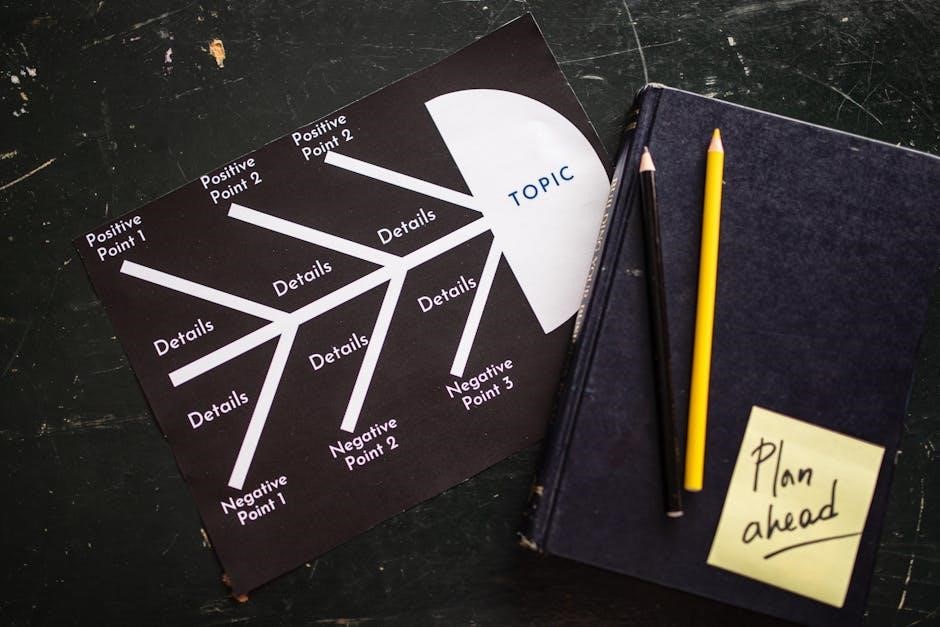
Free Handout Resources
EnglishteacherVault.com offers a free handout designed to aid students in identifying key features of narrative writing through analysis of various texts.
This resource prompts students to jot down important information and compare similarities across different narratives‚ fostering a deeper understanding of the genre.
Utilize graphic organizers‚ readily available online‚ to support planning and brainstorming‚ particularly beneficial for students needing spatial organization assistance.
Consider handouts with pre-drawn lines or boxes instead of blank spaces to bolster fine motor skills and provide structure.
Adapt existing templates to focus on specific elements like character development or plot structure.
Create checklists to guide students through the drafting process‚ ensuring inclusion of essential narrative components.
These free resources significantly enhance the learning experience and provide valuable support for diverse learners.
Multiples Means of Action and Expression
This lesson encourages diverse expression by asking students to complete a Narrative Planning graphic organizer‚ catering to visual learners and those who benefit from structure.
Alongside the organizer‚ students draft the beginning of their own narrative‚ allowing for creative writing and individual voice development.
Offer alternative methods for brainstorming‚ such as verbal storytelling or collaborative mind-mapping‚ for students who struggle with written planning.
Allow students to choose their preferred method of drafting – handwritten‚ typed‚ or even voice-recorded – to accommodate different learning styles.
Provide sentence starters or word banks for students needing additional support with language formulation.
Encourage peer feedback and revision‚ fostering collaboration and diverse perspectives.
Ultimately‚ the goal is to empower students to express their narratives in a way that best suits their individual strengths and needs.
Learning Objectives & Assessment
Students will learn to identify and utilize key narrative elements – character‚ setting‚ plot – in their own writing. They’ll practice crafting compelling beginnings using first-person perspective‚ establishing voice and engaging the reader.
Assessment will focus on the completed Narrative Planning graphic organizer‚ evaluating the thoughtfulness of pre-writing and story structure. The draft of the narrative’s beginning will be assessed for clarity‚ detail‚ and effective use of narrative techniques.
Consider a rubric that evaluates character introduction‚ setting description‚ and the establishment of a clear narrative arc. Peer review can also be incorporated‚ fostering self and collective assessment skills.
Formative assessment through observation and questioning during planning and drafting will inform instruction and provide targeted support.
Connecting Narrative to Broader Themes
Narrative writing provides a powerful lens for exploring complex societal issues. This lesson plan suggests connecting stories to dystopian themes‚ prompting students to consider the consequences of unchecked power or economic instability.
Exploring the history of money and its value‚ as outlined in the provided context‚ offers a unique thematic anchor. Students can craft narratives imagining worlds where currency has lost meaning or is unfairly distributed.
Encourage students to reflect on how their narratives illuminate broader human experiences – resilience‚ loss‚ hope‚ and the search for meaning; This interdisciplinary approach strengthens critical thinking and fosters deeper engagement.
Discussions can extend beyond the text‚ prompting students to analyze real-world parallels and consider their own roles in shaping a more just future.
& Next Steps
This narrative writing lesson plan provides a robust framework for developing students’ storytelling abilities and critical thinking skills. Successfully implementing this plan involves consistent feedback‚ differentiated instruction‚ and a supportive classroom environment.

Future lessons could expand on character development techniques‚ explore different narrative structures‚ or delve into specific literary devices. Encourage peer review and revision to refine students’ work and foster a collaborative learning community.
Consider extending the thematic connections explored – dystopian worlds or the history of money – into longer-form writing projects or research assignments. Ultimately‚ the goal is to empower students to become confident and compelling storytellers.